
Paper dyes that hold their shade on your machine.
Direct, basic and acid dyes, and fluorescent brighteners, for colouring and shading paper and board. Nython sources them from qualified Indian manufacturers and holds every lot to the strength and shade you approved.
See the example lot check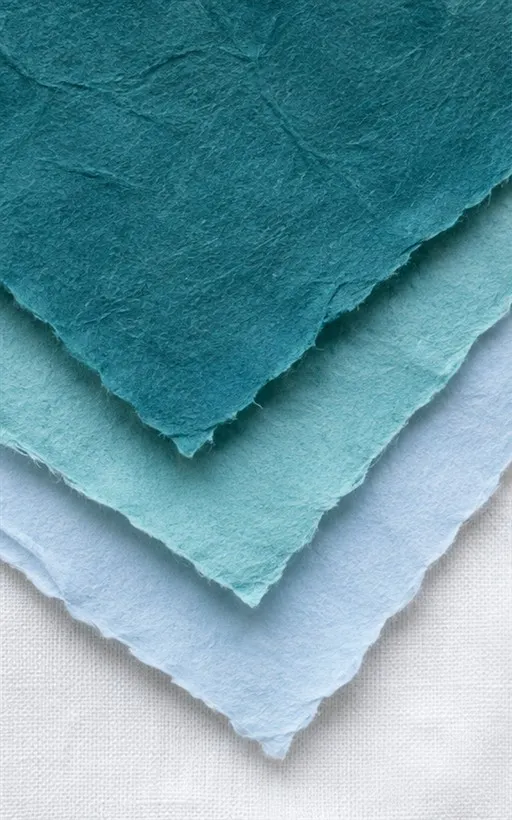
How we check a paper dye lot
| Sample | Standard | Lot | ΔE | Result |
|---|---|---|---|---|
| Top sideagainst standard | 0.7 | Pass | ||
| Wire sideagainst standard | 1.6 | Hold | ||
| Two-sidednesstop against wire | 2.2 | Hold |
Four product families, four behaviours.
| Family | How it holds and where it goes | Watch for |
|---|---|---|
| Direct dyes | Anionic, with an affinity for cellulose fibre and, less so, for fillers. A cationic fixative such as alum helps retention in deep shades. | Shade moves with pH: Direct Yellow 4 is a bright green-yellow in acid and a duller red-yellow in alkali. |
| Basic dyes | Cationic, binding to lignin in unbleached and mechanical pulps. Used in newsprint and groundwood papers for very bright shades. | Poor light fastness, and poor fixation at neutral to alkaline pH. |
| Acid dyes | Anionic, water soluble and brilliant. Usually need a fixative on cellulose. | Calcium and magnesium in hard water can form insoluble salts with anionic dyes. |
| Fluorescent whitening agents | Absorb ultraviolet light and re-emit blue light, so white grades look brighter. Wet end or size press. | Food-contact paper restricts which brighteners may be used. |
Where the colour goes in matters as much as which dye.
The textile version of this problem: shade variation in fabric.
Why the same dye gives a different shade on Tuesday.
What Nython checks before a dye lot ships.
The same sequence as every other product: a specification, a qualified maker, and a lot held to the standard. A dated, named technical opinion, not a certification.
Specify the target
A shade target in CIELAB values with a tolerance under D65, plus the pulp, size system, filler load and mill-water conditions it must hold in.
Qualify the maker
The plant, the raw materials and the batch records, not only a sample, and the ability to repeat strength and shade from lot to lot.
Hold each lot to the standard
Strength and shade against the approved standard, solubility in mill water, insoluble residue and pH, then a mill trial on the machine before bulk.
Paper dyes, in plain terms.
Why does the same paper dye give a different shade from day to day?
Usually something around the dye moved: stock pH, water hardness, residual chlorine, filler level, retention, or the sizing system. The dye lot itself also varies in strength and shade, which is the one cause a buyer can control by specification.
What is the difference between direct and basic dyes for paper?
Direct dyes are anionic and have an affinity for cellulose fibre, so they suit bleached pulps and are common for bright, mid-depth shades. Basic dyes are cationic and bind to lignin-containing pulp, so they are used on newsprint and mechanical-pulp papers, with brilliant shades but poorer light fastness.
Why is one side of the sheet darker than the other?
Two-sidedness often comes from uneven filler and fines retention between the two sides. Fillers such as kaolin, calcium carbonate and talc take up dye, so a side with more filler can look different.
What does a fluorescent whitening agent do?
It absorbs ultraviolet light and re-emits it as blue light, which makes paper look whiter and brighter. It is added at the wet end or the size press, and sometimes alongside a small amount of shading dye.
Do paper dyes for food-contact paper need special care?
Yes. Food-contact paper is subject to rules on which dyes and brighteners may be used, and the rules differ by market. In the US, for example, the FDA restricts the brighteners allowed. Check the rules of the market the paper is sold into before specifying.
Background reading.
- IPPTA, Shade variation in coloured paper and Problems of dyeing.
- TAPPI PaperCon 2011, paper colour and whitening.
- Solenis, paper colorants brochure (supplier literature).