
Five fertilizers, each chosen for the gap it closes.
From potassium and sulphur to fertigation grades. For each product: where it fits, the analysis to expect, and what we check on every lot.
See the example lot check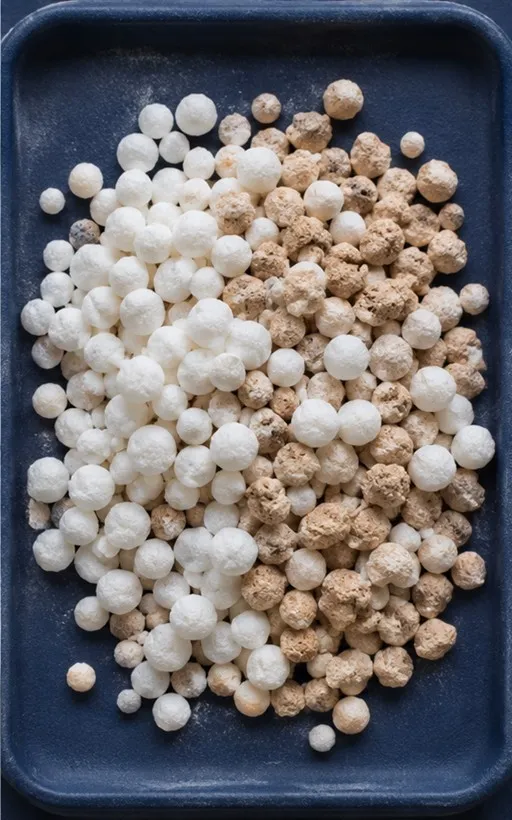
What we check against the declared analysis
- Limits and results
- Read the ≥ or ≤ sign first, then compare the measured result with that limit.
- Pass and hold
- A result outside its limit is flagged for review.
| Parameter | Declared | Measured | Chart | Result |
|---|---|---|---|---|
| Water-soluble P2O5 | ≥ 16.0 | 16.4 | Pass | |
| Sulphur (S) | ≥ 11.0 | 11.5 | Pass | |
| Free phosphoric acid | ≤ 4.0 | 2.6 | Pass | |
| Moisture | ≤ 5.0 | 3.4 | Pass |
| Priority | Product | Positioning | Typical analysis |
|---|---|---|---|
| 1 | Sulphate of potash (SOP) | Potassium and sulphur nutrition | 0-0-50 with about 18% S |
| 2 | Single super phosphate (SSP) | Phosphorus, sulphur and calcium | About 16% P2O5, 11-12% S, 19-21% Ca |
| 3 | Zincated and boronated SSP | Value-added micronutrient nutrition | SSP base plus declared zinc and/or boron |
| 4 | NPK | Crop-specific nutrient solutions | Grade set by crop and stage, such as 10-26-26 |
| 5 | Water soluble fertilizers | Fertigation and specialty agriculture | Fully soluble, such as 19-19-19 or 13-0-45 |
Typical commercial analyses, shown for orientation. The notified specification for each product governs, and we work to the analysis you approve.
Sulphate of potash: potassium and sulphur, without the chloride.
SOP supplies potassium and sulphur in one product and carries almost no chloride, which is why it is chosen for chloride-sensitive crops where muriate of potash can do harm. It costs more than muriate of potash, so it sells on crop response, not on price per tonne. Potash is largely imported, so supply follows the import market.
Chloride-sensitive crops such as tobacco, grapes and seed potatoes, and soils short of sulphur.
Commonly 0-0-50 with about 18% sulphur. Granular for soil use; a fully soluble grade for fertigation and foliar feeding.
Potassium (K2O) and sulphur against the approved analysis, chloride content, moisture, water-insoluble matter and granule size, lot by lot.
Single super phosphate: phosphorus with sulphur and calcium included.
SSP is the original phosphate fertilizer and still one of the most used in India. Unlike DAP it carries sulphur and calcium along with the phosphorus, which is why it is preferred for oilseed crops, where sulphur is part of what the crop makes.
Oilseeds and other sulphur-hungry crops, and soils short of phosphorus and sulphur. Applied as a basal dressing.
About 16% P2O5, 11-12% sulphur and 19-21% calcium. Powder and granular forms.
Water-soluble P2O5, sulphur, free phosphoric acid, moisture and granulation. Free acid and moisture decide whether a bag stays free-flowing in storage.
Zincated and boronated SSP: phosphorus, sulphur and a micronutrient in one pass.
The same national survey that found sulphur short found zinc deficient or latent-deficient in 51.2% of samples and boron in 44.7%. SSP is a practical carrier: the micronutrient travels in the same bag as the phosphorus. The trade-off is dose. Zinc and boron are needed in small amounts, and boron has a narrow margin between enough and too much, so even distribution matters more than the headline percentage.
Zinc: coarse, calcareous and alkaline soils such as the Indo-Gangetic plain. Boron: red, lateritic and calcareous soils, notably in eastern India.
SSP base plus a declared zinc and/or boron content. The declared figure must match the label and the notified standard, which we confirm before a grade is offered.
Declared zinc and boron against analysis, uniformity of the micronutrient across the bag, and the SSP parameters above.
NPK: the nutrient ratio matched to the crop, not the other way round.
Compound NPK fertilizers put nitrogen, phosphorus and potassium in every granule, so each granule carries the same ratio. A crop-specific range picks the ratio for the crop and stage, with sulphur or zinc added where soil tests call for them. Blends of separate fertilizers are easier to tune but can segregate in transit, and preparing a mixture needs a certificate of manufacture under the Fertiliser (Control) Order.
Basal and top dressing across cereals, cotton, sugarcane, vegetables and horticulture, with the grade chosen for crop and stage.
Compound grades such as 10-26-26 or 12-32-16, and variants with sulphur. Grade set by crop and stage.
N, P2O5 and K2O against the declared grade, granule size and hardness, moisture, and for blends, uniformity from the top to the bottom of the bag.
Water soluble fertilizers: for drip lines and specialty crops.
Fully soluble grades are applied through irrigation (fertigation) or as foliar sprays, so the nutrient reaches the root zone in the water the crop is already getting. They are permitted under the Fertiliser (Control) Order, and they are the one line where solubility and residue matter as much as nutrient content.
Drip-irrigated horticulture, orchards, greenhouse and protected cultivation, and any crop where foliar feeding is part of the programme.
Grades such as 19-19-19 (balanced), 13-0-45 (potassium nitrate) and 0-0-50 (soluble SOP). Crystalline and fully soluble.
Nutrient percentages, solubility and insoluble residue (residue blocks drip emitters), pH and conductivity of a standard solution, and low chloride and sodium.
Fertilizers, in plain terms.
What is the difference between SOP and MOP?
Sulphate of potash (SOP) is about 50% K2O with roughly 18% sulphur and almost no chloride. Muriate of potash (MOP) is about 60% K2O and carries chloride. SOP costs more, so it is chosen where chloride hurts the crop or where the soil also needs sulphur.
Which crops need sulphate of potash?
Mainly chloride-sensitive crops such as tobacco, grapes and seed potatoes, and crops on soils short of sulphur. On tolerant crops and sulphur-rich soils, muriate of potash is usually the cheaper route.
What does SSP give that DAP does not?
DAP supplies nitrogen and phosphorus (18-46-0). Single super phosphate supplies phosphorus together with sulphur and calcium, which is why it is preferred for oilseeds, where sulphur is part of the crop’s make-up.
Why add zinc or boron to SSP?
Zinc and boron are needed in small amounts and are short in many Indian soils. Carrying them in the SSP bag puts the micronutrient on the field in the same pass as phosphorus and sulphur. Boron has a narrow margin between enough and too much, so even distribution matters.
What is the difference between a compound NPK and a blend?
A compound NPK puts nitrogen, phosphorus and potassium in each granule, so every granule has the same ratio. A blend mixes separate fertilizers, which is easier to tune to a crop but can segregate in transit. Preparing a mixture needs a certificate of manufacture under the Fertiliser (Control) Order.
What is fertigation, and which fertilizers suit it?
Fertigation applies nutrients through the irrigation water, usually drip lines. It needs fully soluble grades, because insoluble residue blocks emitters. Common examples are 19-19-19, 13-0-45 and soluble 0-0-50.
Does Nython certify fertilizer quality?
No. Nython gives a technical opinion on whether a lot matches the analysis you approved. That is not a statutory certification, and compliance with the Fertiliser (Control) Order rests with the licensed manufacturer, importer and seller.
Where the figures come from.
- Soil deficiency: Shukla et al., Deficiency of phyto-available sulphur, zinc, boron, iron, copper and manganese in soils of India, Scientific Reports, 2021.
- Regional crop responses: ICRISAT, Widespread deficiencies of sulfur, boron and zinc in Indian semi-arid tropical soils.
- Regulation: Fertiliser (Control) Order, 1985. Typical analyses are drawn from Indian manufacturers’ published product pages and are indicative only.